
Ballpoint vs. Gel Pens: Which is Right for You?
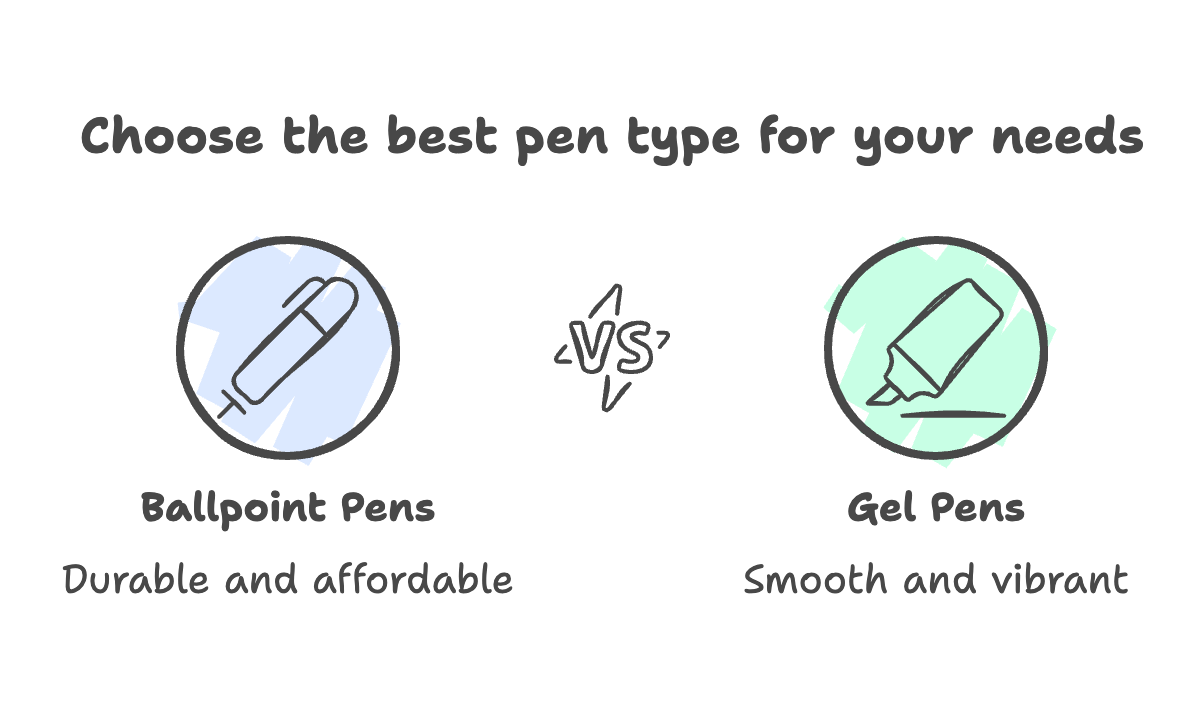
When it comes to everyday writing tools, pens are indispensable. From office desks and school bags to creative studios and home counters, pens are everywhere. But not all pens are created equal. Among the many types, ballpoint pens and gel pens remain the most popular. Each offers distinct advantages, writing styles, ink types, and even aesthetic appeal.
So which is better: ballpoint or gel? In this article, we’ll dive deep into the features, pros and cons, writing experience, ink types, price differences, and best use cases for each pen to help you make an informed choice.
What Is a Ballpoint Pen?
A ballpoint pen uses oil-based ink that is thick, fast-drying, and water-resistant. The pen has a tiny rotating metal ball (usually brass, steel, or tungsten carbide) at its tip. As the ball rotates during writing, it dispenses ink from a reservoir onto the writing surface.
Key Features of Ballpoint Pens
- Ink Type: Oil-based (viscous and quick-drying)
- Writing Feel: Smooth but requires more pressure
- Lifespan: Long-lasting ink reservoir
- Paper Compatibility: Works on almost all types of paper
- Smudge Resistance: High
What Is a Gel Pen?
A gel pen uses gel-based ink, a blend of water-based and pigment-based ink that results in a thicker, more opaque mark. It also uses a ball mechanism for ink delivery, similar to a ballpoint pen.
Key Features of Gel Pens
- Ink Type: Water-based gel (pigment-rich)
- Writing Feel: Effortless and smooth with less pressure
- Color Vibrancy: Rich, vibrant ink output
- Drying Time: Slower than ballpoint
- Smudge Resistance: Moderate, especially for left-handers
Ballpoint vs. Gel Pen: Side-by-Side Comparison
| Feature | Ballpoint Pen | Gel Pen |
|---|---|---|
| Ink Type | Oil-based | Water-based gel |
| Writing Pressure | Requires more pressure | Light pressure needed |
| Smoothness | Moderate | Extremely smooth |
| Color Vibrancy | Low to moderate | High |
| Smudge Resistance | Excellent | Moderate |
| Drying Time | Fast | Slower |
| Ink Longevity | Long-lasting | Dries out faster |
| Paper Compatibility | Universal | Best on quality, smooth paper |
| Ideal for Left-handers | Yes | Needs caution |
| Price Range | Affordable | Slightly costlier |
| Refill Options | Widely available | Limited, depending on brand |
1. Writing Experience
Ballpoint pens are known for their resistance and friction during writing. Some people enjoy the tactile feedback it gives, especially for note-taking or forms. However, long writing sessions can cause hand fatigue.
Gel pens offer a gliding sensation. The ink flows easily, making them ideal for cursive writing, drawing, or journaling.
2. Ink Flow & Appearance
Ballpoint ink is thick and less vivid. Gel ink delivers bolder, opaque lines with richer colors, ideal for standout writing or art.
3. Drying Time and Smudging
Ballpoints dry instantly and are excellent for fast writing. Gel pens need more drying time and may smudge if not careful.
4. Durability and Ink Lifespan
Ballpoints have long-lasting ink and resist drying. Gel pens run out quicker and are prone to drying if not used regularly.
5. Cost and Availability
Ballpoints are cheaper and widely available. Gel pens are pricier but offer a smoother writing experience and more color variety.
6. Environmental Impact
Ballpoints last longer and generate less waste. Gel pens are less eco-friendly unless you use refillable options.
7. Use Cases
Best Uses for Ballpoint Pens:
- Signing legal documents
- Writing on carbon copy paper
- Taking notes at work or school
- Form-filling
- Outdoor writing
Best Uses for Gel Pens:
- Creative writing and journaling
- Drawing and illustrations
- Planners and bullet journals
- Cards and letters
8. Pros and Cons Recap
Ballpoint Pen Pros:
- Long ink life
- Smudge-free
- Writes on any surface
- Budget-friendly
- Left-hand friendly
Ballpoint Pen Cons:
- Less vibrant
- Requires more pressure
Gel Pen Pros:
- Vibrant, smooth writing
- Less hand fatigue
- Creative options
Gel Pen Cons:
- Faster ink depletion
- More prone to smudging
- Higher cost
9. Expert Tips on Choosing the Right Pen
- Students: Use ballpoints for exams, gel pens for creative work
- Professionals: Ballpoint for signatures, gel for meetings
- Left-Handers: Use quick-dry gels or stick to ballpoints
- Artists: Choose gel pens with archival ink and fine tips
- Office Use: Ballpoints are more reliable and economical
10. Popular Brands to Consider
Ballpoint Pen Brands:
- Parker
- BIC
- Pilot
- Cross
- Paper Mate
Gel Pen Brands:
- Pilot G2
- Uni-Ball Signo
- Pentel EnerGel
- Muji
- Zebra Sarasa
Conclusion: Which Pen Is Right for You?
The choice between a ballpoint pen and a gel pen ultimately depends on your personal preferences and writing needs. Ideally, keep both types handy-ballpoints for reliability, gels for creativity.
Quick Summary:
Ballpoint = Practical and reliable
Gel = Expressive and smooth
FAQs: Ballpoint vs. Gel Pens
Q1. Are gel pens good for official documents?
Not recommended. Oil-based ballpoint pens are more permanent and fade-resistant.
Q2. Do gel pens bleed through paper?
Yes, especially on thin or low-quality paper. Use high-GSM paper to avoid it.
Q3. Can I refill a gel pen?
Some brands offer refillable gel pens. Always check the product before buying.
Q4. Which pen is better for drawing or sketching?
Gel pens, due to better pigment and line control, are ideal for artistic work.
Q5. Do ballpoint pens work better in hot climates?
Yes, they are less prone to drying out and offer better consistency in extreme temperatures.
About the Author